Showing posts with label infection. Show all posts

Wednesday, February 19, 2014

Immunity

The immune system is an amazingly complex group of cells, organs and tissues that work in tandem to keep the body's defenses intact and protected against harm.

The immune system consists of primary and secondary lymphoid organs. Primary lymphoid organs; comprised of bone marrow and thymus, produce immune cells (B and T lymphocytes or white blood cells) which migrate through the bloodstream to reach secondary lymphoid organs. Secondary lymphoid organs; comprised of the lymph nodes, lymphoid tissue, spleen, tonsils, Peyer's patches and the appendix, all play a distinct role in maintaining an effective immune response.


MALT the body's first line of defense

Mucosa-associated lymphatic tissue (MALT) is a system of small concentrations of lymphoid tissue located in various sites of the body and can be found in the gastrointestinal tract, thyroid, lungs, eyes and skin. MALT plays a large role in regulating mucosal immunity as these surfaces provide a barrier between our bodies and the external environment.

Take for instance one of the biggest mucosal sites - the gut. It has the ability to transport many foreign antibodies through the ingestion of food. The immune system inherently has a vigorous response to kill off any pathogenic organisms gaining entry through the gut while retaining food antigens that foster a positive or negative immune response. The gut flora and MALT communicate through cytokine activity to harmonize the appropriate immune response for pathogenic organisms versus friendly organisms.


GALT building good bacteria

Consisting of both isolated and aggregated lymphoid follicles, gut associated lymphoid tissues (GALT) contains up to 70% of the body's immunocytes. Aggregated lymphoid follicles surrounded by follicle associated epithelium (FAE) form the interface between the GALT and the microenvironment. FAE contains M-cells that transport antigens and bacteria toward underlying immune cells that either activate or inhibit an immune response.

GALT is the largest lymphoid tissue of the human body. Beginning at birth, GALT is exposed to microbial antigens occurring in the initial intestinal colonization from vaginal delivery's. This is why it is highly valuable to have normal delivery versus C-section.

A stable colonization of bacteria is typically reached in children at approximately 4 years of age. These bacteria are essential for the development and functionality of a fully functioning and healthy immune system and promotes tolerance towards safe food and microbial antigens.


Photo by Nature Reviews : Immunology


What actions need to be taken to improve MALT & GALT response? What we can do to help your MALT & GALT: 

1. Identify and remove offending agents (i.e. sensitivities, toxins, pathogens)

2. Remove source(s) of inflammation

3. Promote mucosal health throughout your gut


  • Intestinal microflora weighs about 1.5 kgs
  • Approximately 50% of fecal mass is bacterial biomass
  • Microflora produces about 2 liters of 'gas' per day
  • Acquisition of resistance to antibiotics occurs in the intestine  


Enhancing Immune Function with Probiotics

The best way to prevent infections and disease is to ensure that the body's defense mechanisms are functioning optimally and are able to protect against foreign bodies (pathogens). Much research has been reviewed lately in the quest to quantify the benefits of probiotics and studies have shown promising results.

The use of probiotics stimulates gut reaction by pro ducting vitamins, synthesizing amino acids and carrying out biotransformation of bile. Probiotics help to create a defensive barrier within the host as they compete with other microorganisms for attachment sites in epithelial cells.

At any given point, there are anywhere from 100 trillion viable microbes in the human intestine. Specifically, the gut micro biome provides vital biochemical pathways that allow the body to metabolize indigestible foods like starches, gum, cellulose, pectin's, sugars and alcohol. Once the body is able to metabolize and release toxins from the system, absorption of nutrients will be increased resulting in improved cellular function.


Make sure you have a good Probiotic:


  • Must be considered totally non-pathogenic
  • Contain species indigenous to the target host
  • Able to survive intestinal transit and stomach acid
  • Capable of immunomodulation in-vitro
  • Possess clinically documented health properties validated by a thorough Quality Assurance program
  • Colony forming units (CFU) or viable cells are listed on label
  • Formulation should keep well during processing and storage


Sunday, December 8, 2013

Is Sugar Toxic?


“In 1980, roughly 1 in 7 Americans were obese, and almost six million were diabetic, and the obesity rates, at least, hadn’t changed significantly in the 20 years previously. By the early 2000s, when sugar consumption peaked, 1 in every 3 Americans are obese, and 14 million were diabetic.”
~ Gary Taubes, NY Times


In today’s society it is common knowledge that Americans are facing a health epidemic. A boom in obesity and diabetes. On May 26th, 2009 a professor, Robert Lustig, gave a lecture called “Sugar: The Bitter Truth.” This sparked a huge viewing and a lot more research into sugar. One journalist from NY Times, Gary Taubes, wrote a very intriguing article in which all the italicized paragraphs are quoted from in this article.


In our practice we are constantly reminding people that sugar is bad for them, it is hard on organs such as pancreas, liver, kidneys and the brain. This goes for all people across races, ethnic, genders, etc. These organs are vital in detoxification, metabolism, and SO MUCH MORE!! For people who have diabetes there is a multitude of interactions that must be corrected in order to regain a person’s health.


In Gary Taubes article he talks about how Diabetes Mellitus type II and insulin resistance is due to a dysfunction of the pancreas not being able to release enough insulin. This theory is not completely true.


One of my mentors discussed with me one of his research findings that in a cadaver study while looking at Type II Diabetics, some of the cadavers in the study had normal pancreatic insulin function. This means that the pancreas was able to release normal levels of insulin but the patient was still diagnosed with diabetes. This means that when addressing issues of high blood sugar we must look at both pancreas function and insulin receptor sites.


Sugar is not just an empty calorie, Lustig says; its effect on us is much more insidious. “It’s not about the calories,” he says. “It has nothing to do with the calories. It’s a poison by itself.”


If Lustig is right, then our excessive consumption of sugar is the primary reason that the numbers of obese and diabetic Americans have skyrocketed in the past 30 years. But his argument implies more than that. If Lustig is right, it would mean that sugar is also the likely dietary cause of several other chronic ailments widely considered to be diseases of Western lifestyles — heart disease, hypertension and many common cancers among them.


I believed this article to be very valuable. Doctors such as myself love gloating to the everyone and telling them to “do this” and “do that” but yet modern medicine (in the past) has refused to believe what we (Holistic providers) say is true. Finally the research is here proving it. Dr. DeJarnette and Dr. Rees to worldly renowned doctors dedicated a few decades of their life to research and helping people feel better. So much research like this article are finally getting out and opening eyes and ears.


Closing Thought


A key point in the article, the writer states “... because he’s willing to insist publicly and unambiguously, when most researchers are not, that sugar is a toxic substance that people abuse. In Lustig’s view, sugar should be thought of, like cigarettes and alcohol, as something that’s killing us.”

I hope you all take GREAT care of your bodies! Remember, you only have one!


Thyroid - Gut Connection


When was the last time you walked into your doctor’s office and said “I would like my digestive tract assessed because I know my thyroid hormones are out of balance?”

Hippocrates (Image Right) told us 2,000 years ago, “Death begins in the colon.”

How did he know that? 

Did he have like a special antenna that only he could hear or tune into? NO!! He observed the human body and thought logically. When you eat food, it goes in your mouth and down into your gut. Right? (the answer is yes)

What if that salad was not washed right and it still had pesticides on it? What if that steak was improperly cooked and it was infected with E. Coli? I can sit here and write 10,000 what if scenarios but what if you had a properly working digestive system?

Most people don’t, especially those with thyroid issues including hypo- (poor) and hyper- (too much) -thyroidism. All the nutrients, minerals, cofactors, etc. must be digested and absorbed through the gastrointestinal tract. If there is a digestive issue, indigestion, food allergies, diarrhea and/or constipation etc. it means there is an imbalance in the gastrointestinal tract which ultimately causes a loss of stomach acid production, inadequate pH and dysbiosis.


The Thyroid - Gut connection is a very complex an integrated system that should be screened in EVERY thyroid case. The #1 cause worldwide of thyroid hypofunction (hypothyroidism) is iodine deficiency, but it is NOT the #1 cause in the United States. The #1 cause of hypothyroidism in the U.S. is Hashimoto’s autoimmune thyroid. (For more information about autoimmune thyroid consult our office)

To support hypothyroidism or regulate an autoimmune thyroid condition like Hashimoto’s, you must address the digestive tract. Gut dysfunctions are the most commonly overlooked health issue in the medical field today (including alternative care).


Healthy Gut = Healthy Thyroid


The thyroid gland is the gas pedal for the body. When the body's metabolism is running slow, more thyroid hormone is produced to speed up metabolism. When the body’s metabolism is on overdrive, the thyroid will diminish the amount of thyroid produced. The body is a reflex machine, constantly trying to maintain homeostasis or equilibrium. In doing this many mechanisms and pathways are cut short or over used. For example, if you eat fried fatty foods 4 days out of the week, your gallbladder will not like you and will become sluggish and make gallstones.

Did you know with a sluggish gallbladder you minimize your body’s ability to clear hormones including estrogen?

FUN FACT:  
When you remove your gallbladder the cystic duct takes over  the storage of bile.

Every cell in the body has a thyroid receptor, even neurons (cells in the brain). Most people are unaware they have a thyroid issue until they start having issues including but not limited too:

- Fatigue / Sluggish
- Thinning of hair
- Loss of the outer ⅓ of eyebrow
- Cold hands and feet, all over
- Dry skin / flaky
- Difficulty losing weight


Summary

The Thyroid - Gut Connection is an invaluable aspect of health that many healthcare providers overlook. The thyroid has a receptor on every cell in the body. The gut digest and absorbs food for every cell in the body. When gastric atrophy occurs, proteins are not properly digested and often become a source of inflammation. With sluggish gallbladder / biliary system the body is not equipped to digest and absorb fats which also affect cholesterol levels, adrenals status, and hormones. The Thyroid - Gut Connection should be assessed on every patient with the above signs and symptoms for preventative health.

For more information on the Thyroid - Gut Connection contact our office through our website Weber Chiropractic or call 916.616.1595.


Wind Up the Neuro-Endocrine-Immune System


The body is a remarkable system that should not be taken for granted. I, for one, after continual study of the body for going on 7 years of intense study I am completely in awe of how sensitive yet how strong it is. As some of you know I have been doing some form of martial art for going on twelve years. I could amaze you how small pressure can topple the body and how so little effort could send a man off his/her feet.

Now with that in mind I want to take you to your body's cellular level and show you how sensitive yet how strong it is. The first system to introduce you too that has been called the Final Common Pathway or Stress Pathway helps the body cope with the stress placed upon it whether it be Bacterial, Viral, Fungi, Environmental, and/or Mental Emotional stress to name a few.

The hypothalamic-pituitary-adrenal axis (HPA axis) is a neuroendocrine system that regulates the reactions to stress, energy storage, and the immune system.  Cytokines (chemical messengers) act at several levels of the HPA axis to induce the release of cortisol and epinephrine.  Cortisol and epinephrine act to suppress the immune response, thus forming a negative feedback loop.(1) Long-term abuse of this system often leads to Alzheimer’s, Depression and Diabetes to name a few.

Constant activation of the HPA axis (stress-induced) will cause a weakened Neuro-Endocrine-Immune (NEI) system.


The NEI system is your main wiring system between each of the 10 systems in your body. Of the the most important and most easily accessible is the immune system. A break in any 4 barriers (skin, lungs, gut and blood-brain barrier) will increase demand on the immune system.

The immune system protects the body against foreign challenges by its ability to differentiate between the body's own cells and foreign materials. Upon encounter with viruses, bacteria, toxins, or fungi, the immune system recognizes the molecular components of the foreign antigen and a response is activated to appropriately eliminate the antigen from the body. The immune system's response to an antigen can result in disturbances through out the NEI Supersystem at both the initial onset of infection, as well as after chronic exposure.


Bacteria

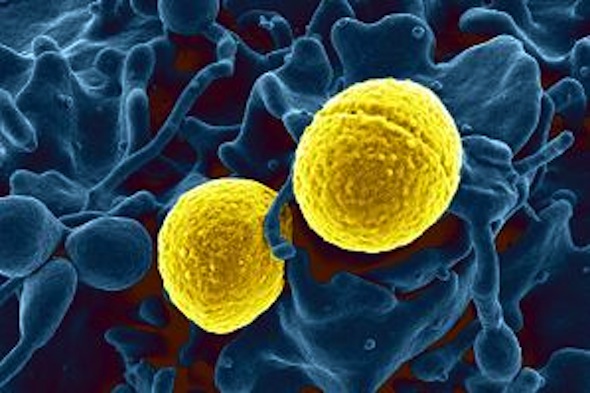
A large variety of bacteria normally colonize the skin, intestines, and other mucosal sites, and are important for health. Bacterial disease results when harmful bacteria enter the body and grow in normally sterile areas (lungs, bladder, and brain) or overcrowd the beneficial microbiota in areas such as the gut. Acute infections (e.g. Neisseria meningitidis, Salmonella, etc.) can often be easily diagnosed via symptoms, history, and regular lab tests (complete blood count, culture and sensitivity test, X-rays and/or spinal taps). Chronic low-level bacterial infections (e.g. Streptococcus pneumonia, Helicobacter pylori, and Staphylococcus aureus) may not be easily detectable and therefore may result in chronic inflammation.

Many symptoms caused by bacterial disease (fever, muscle ache, and headache) are not directly due to the bacteria, but are a result of the body's immune response and the release of pro-inflammatory cytokines that may, in turn, lead to alterations in neuropsychological and endocrine functions. Chronic bacterial infections (e.g. Streptococcus pneumonia, Helicobacter pylori, and Staphylococcus aureus) may be the root cause of chronic pain, inflammation, and disturbances within the neuroendocrine systems that manifest clinically as chronic disease.(1)


Fungi

Fungi are primitive vegetables that are found in the environment, in foods, and within the body (e.g., Candida albicans). Normally, the immune system keeps fungi such asC. albicans in check, but if a person is immunodeficient or their internal environment (microbiota) is disturbed (e.g. as a consequence of antibiotic therapy), opportunistic fungal infections can occur, leading to pathology and even death. Subclinical fungal infection may be detectable via immune perturbation (cytokine responses to fungi), increases in intestinal permeability (IgG responses to foods) and neuroendocrine disruptions (alterations in neurotransmitter levels). (1)


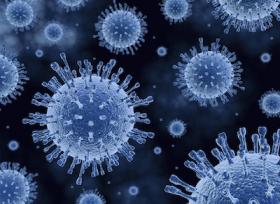
Rhino Virus - common cold

Virus

A virus is a small infectious agent that can only replicate inside the cells of a living organism. Viral infections generally provoke the immune system resulting in activation of the innate and subsequent adaptive immune responses, and concomitant cytokine release. Although most pathogenic viruses are eliminated by this immune response, immune evasion or immunosuppression can result in chronic viral infections. Some chronic viruses may be cytotoxic and result in tissue/organ damage (HBV and HCV), while others may result in chronic symptoms (EBV and CMV). There are over 5000 identified viruses in nature with new ones being discovered on a regular basis.(1)

Viral infections are often difficult to detect, especially in the case of novel or uncharacterized viruses. Nonetheless, the immune response that accompanies viral infections can result in altered cytokine levels that in turn affect neurotransmitter and hormone levels as well. Assessment of NEI Supersystem© parameters may provide a clinical approach to help identify immune activation in patients suffering from unexplained chronic disorders. (1)


Environmental

The environment is a source of constant immune stimulation and over the last century it has become an increasingly complex assortment of industrial, synthetic, and commercially processed compounds. Altogether, this artificial environment has become the basis for our modern life but for some it can be a source of immune challenges.  Immune reactions to metals in our jewelry, pesticide residues on our foods, clothes detergents, or the coloring and preservatives in our foods can be the root cause of a number of health conditions including chronic inflammation, autoimmunity, and psychiatric complaints. Type IV hypersensitivity and cytokine reactions against environmental compounds can alter the body's biochemistry, neural processing, hormone activity and lead to chronic inflammation and disease. (1)

  • Metals: implants, dentistry, jewelry, pollution
  • Pesticides/ herbicides: food, lawns, occupational exposure
  • Household chemicals: detergents, oven cleaners, polishes, air fresheners
  • Food additives: food colorings, artificial sweeteners, preservatives
  • Food processing ingredients: molds, fungi, modified proteins, modified starches


Mental Stress / Emotions

Emotional stress can have a profound effect on overall health by influencing all aspects of the NEI system. Emotions have been shown to stimulate specific brain regions and affect the release of neurotransmitters and certain hormones as an effect of stress on the body. Individuals with high emotional stress can initially experience a wide variety of symptoms including anxiety, anger, fatigue, low mood, or trouble sleeping. Chronic emotional stress can also influence the immune system and the ability of the body to keep inflammatory responses under control, leading to further imbalances in the NEI system. Emotional factors must be addressed in conjunction with any treatment program to restore balance to the NEI system and for complete symptom resolution.(1)


Conclusion

No matter what we do we will always interact with a stressful situation. The best way to counter stress is allow your body to work naturally and not worry about it. Do you have to think to walk, no your body does it automatically. When you touch a hot plate and jerk your hand away, did you have to think to yourself, “That is hot, pull your hand away quickly!” NO, your body did that automatically due to the intimate connections of the NEI system. Be good to your body, you only have one.

Treat it with monthly maintenance to a chiropractic office (hint hint) and be sure and check its internal biochemistry at least twice a year.


REFERENCES:


1. NeuroScience. https://www.neurorelief.com/index.php?p=cms&cid=109&pid=84

Are You Old and Moldy?

Identifying Mold/Fungi/Yeast & How it Behaves


Most of us have seen mold in one form or another on some item throughout our days, moldy bread, black mold creeping up the wall, I have actually seen it on decaying animals. “GROSS!!” Did you know mold, yeast and fungus can enter into your body through multiple entry routes and can wreak havoc on your body. In this article I want to define what mold is, discuss the difference between bacteria and mold, and then bring it all together for you so when someone asks you about mold, yeast or fungus you have something to tell them.


What Is Mold?


Mold is classified as an opportunistic pathogen meaning, if the environment is right it will move in! First thing to know about “Mold,” what is it?


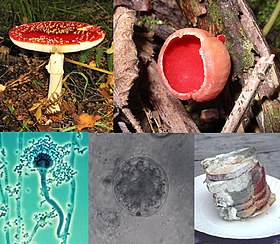
For simplicity sake the term “mold” encompasses all of the following: yeast, fungi and fungus.


Molds are microscopic fungi that live on plant or animal matter in a moist environment either warm or cold. When humidity is high there is a high potential for mold. No one knows how many species of fungi exist, but estimates range from tens of thousands to perhaps 300,000 or more. Most are filamentous (thread-like) organisms and the production of spores is characteristic of fungi in general. These spores can be transported by water or insects. An interesting characteristic of mold is that it can travel via airborne. Mold travels a lot like dandelion seeds blowing across a meadow.(1)


Detection of species


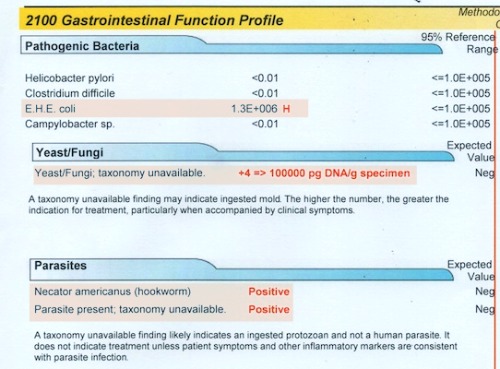
In our office we rely heavily on laboratory findings of our patient’s labs to determine their internal biochemistry, mainly blood-serum tests, but here lately we have been diving deeper into patients that have chronic infections using the Gastrointestinal Full Profile. We are able to determine what type of species is being inhabited and if the patient has any drug resistant genes. With this information we are able to open a full arsenal to both the patient and the treating medical physician.


Unlike bacteria and viruses, molds unfortunately share the same cell characteristics to humans.  Humans and molds are eukaryotic cells which are further evolved and much more sophisticated than the prokaryotic cells being bacteria.   


This patient has a chronic infection, parasites and a positive DNA finding of Yeast/Fungi.


Common Question:
If mold is found on our food, bread or jelly, can we cut off the moldy portion and eat the rest?

Answer:
NO!! Molds are microscopic organisms therefore they are not visible to the naked eye but they are still present.(1)  When a mold spore lands on an apple for instance, the first strand that grows out is called a hypha.  Then those mold threads continue to spread and grow throughout the whole apple which is similar to a root system of a tree and this becomes hyphae.  Then as more hyphae grow throughout the whole apple, this is called mycelium.  As conditions continue to remain favorable to the mold, the mycelium must spread throughout the whole apple before they sprout their reproductive bodies which produces mold spores.  This is what is visible to the naked eye as black fuzz or white cotton balls.  Remember just because you slice that visible portion of mold off of the apple, you are only slicing off the reproductive bodies of the mold.  The mold has spread all over the apple which is why that mold infested food must be thrown out.  My botany professor always used to tell us, “when in doubt, throw it out.”


Difference between Bacteria and Mold: Diagnosis and Treatment


Bacteria species such as Streptococcus is responsible for strep throat (sore throat) which typically results in the patient feeling feverish, malaise and fatigued. Bacterial infections can infiltrate sinuses, throat, lungs, gastrointestinal, reproductive organs, and skin. Mold species may infect the same areas.


a. b. c.
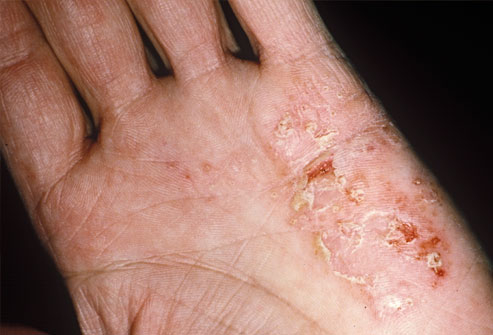
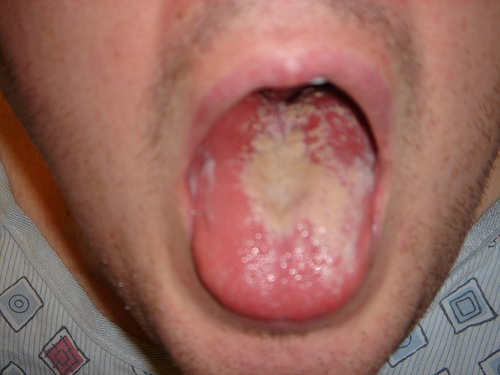
Chronic yeast infections: (a) is due to ingestion of mold resulting in itchy, dry and flaking skin. (b) mold allergies affecting nasal cavities. (c ) candida infection in the mouth.


Exposure to high levels of fungi can be a health threat from inhalation, ingestion or skin contact involving tiny mold spores (invisible to the naked eye), mold toxins (mycotoxins) or mold bodies themselves. Initial symptoms vary depending on entry point but if inhaled; sore throats, hoarseness, cough and nasal congestion. In time as infection progresses symptoms such as headaches, fatigue, rashes, dizziness, shortness of breath, sinus infections, ear pain, muscle and joint pain, and fever. These are symptoms of direct mycotoxin exposure. (2)

As mold conditions go untreated the immune system is overloaded and becomes overzealous. Clinical manifestations of this overloaded immune system result in an unrelenting flu syndrome. This has an effect on one’s daily life because it affects their thinking ability (cognition), energy levels, sleeping patterns, etc. According to research, these changes can be reversible, at least in part, but they can take years to resolve. Correcting digestive chemistry such as low stomach acid is critical for patient recovery.


Diagnosis of mold hypersensitivity syndrome rests on three criteria:(2)
1. An identified heavily contaminated source
b. Found on food
2. Appropriate symptoms temporally related to exposure
a. Difficulty losing weight, chronic allergies, skin problems (dried, rashes, red bumps), chronic headaches, chronic sinusitis, chronic yeast infections, ringworm, etc.
3. Positive lab results
b. Postive IgG antibody test - Serum blood test


Additional Information:


Molds are highly cross-reactive, which means that an antibody response on exposure to mold A may show significant reactivity on the IgG panel test to mold B as well. This means that people who have a mold allergy are more sensitive to food allergies involving grains i.e. bread.


Molds can be VERY difficult to get rid of. If you notice the “Diagnosis” listed above, you have to identify it, figure about where you caught it, check for any other exposure and stop feeding it. Diets high in fermented foods such as cheeses, bread, or beer and those high in sugars, including fruits, fats and oils increase internal fungal growth, according to the website Healing Cancer Naturally.(3)


Garlic and onions, sources of manganese, B6, flavonoids and Vitamin C are said to retard viruses and yeast. Other foods that help combat molds include: shallots, ginger, leeks, green vegetables, soy products, and fish. (3)


A product we carry in the office called “Yeastonil.” This scientifically backed formula helps to establish a broad spectrum anti-fungus, anti-mold, and anti-ova intestinal environment.  It provides natural compounds that have shown powerful mold, yeast, and fungus growth inhibition, and help modulate the unhealthy microbial environment produced by these microorganisms.


Conclusion


Foods and supplements alone are not enough to combat mold. In patients with a chronic history of mold must check their home and office for mold spores. This is best left to a professional but there are kits such as Boomerang Air Quality Test that may indicate the need for mold removal.


The first approach to getting rid of mold is to confirm that you have a mold problem through laboratory testing. Second is to identify its source or entry. Third stage is correction.


There is an abundant amount of information on Yeast, Mold, and Fungi that is not discussed here. If you wish to know more about what you can do to keep from getting “old and moldy” contact our office today and get assessed the correct way. If you are not in the Sacramento region, do not worry ~ 40% of patients we take care of in the office are out of state.


Thank you!


References:


1. Molds on Food: Are they Dangerous? http://www.fsis.usda.gov/FactSheets/Molds_On_Food/


2. Chronic Neuroimmune Diseases: Fungal Hypersensitivity. Vincent Marinkovitch, MD.  http://www.anapsid.org/cnd/diffdx/marinkovitch.html