Showing posts with label probiotics. Show all posts

Wednesday, February 19, 2014

Immunity

The immune system is an amazingly complex group of cells, organs and tissues that work in tandem to keep the body's defenses intact and protected against harm.

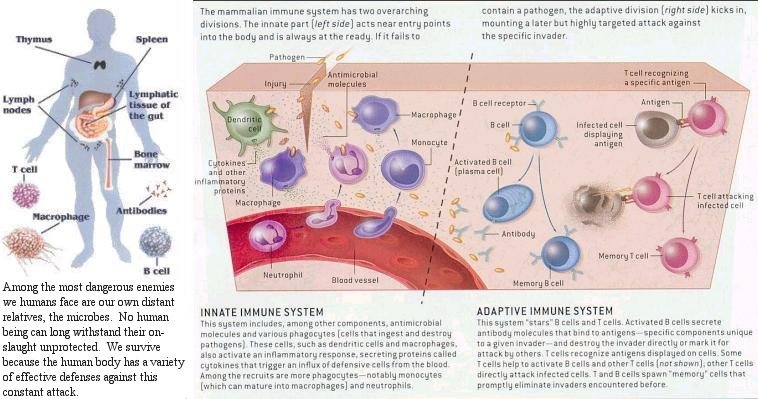
The immune system consists of primary and secondary lymphoid organs. Primary lymphoid organs; comprised of bone marrow and thymus, produce immune cells (B and T lymphocytes or white blood cells) which migrate through the bloodstream to reach secondary lymphoid organs. Secondary lymphoid organs; comprised of the lymph nodes, lymphoid tissue, spleen, tonsils, Peyer's patches and the appendix, all play a distinct role in maintaining an effective immune response.


MALT the body's first line of defense

Mucosa-associated lymphatic tissue (MALT) is a system of small concentrations of lymphoid tissue located in various sites of the body and can be found in the gastrointestinal tract, thyroid, lungs, eyes and skin. MALT plays a large role in regulating mucosal immunity as these surfaces provide a barrier between our bodies and the external environment.

Take for instance one of the biggest mucosal sites - the gut. It has the ability to transport many foreign antibodies through the ingestion of food. The immune system inherently has a vigorous response to kill off any pathogenic organisms gaining entry through the gut while retaining food antigens that foster a positive or negative immune response. The gut flora and MALT communicate through cytokine activity to harmonize the appropriate immune response for pathogenic organisms versus friendly organisms.


GALT building good bacteria

Consisting of both isolated and aggregated lymphoid follicles, gut associated lymphoid tissues (GALT) contains up to 70% of the body's immunocytes. Aggregated lymphoid follicles surrounded by follicle associated epithelium (FAE) form the interface between the GALT and the microenvironment. FAE contains M-cells that transport antigens and bacteria toward underlying immune cells that either activate or inhibit an immune response.

GALT is the largest lymphoid tissue of the human body. Beginning at birth, GALT is exposed to microbial antigens occurring in the initial intestinal colonization from vaginal delivery's. This is why it is highly valuable to have normal delivery versus C-section.

A stable colonization of bacteria is typically reached in children at approximately 4 years of age. These bacteria are essential for the development and functionality of a fully functioning and healthy immune system and promotes tolerance towards safe food and microbial antigens.


Photo by Nature Reviews : Immunology


What actions need to be taken to improve MALT & GALT response? What we can do to help your MALT & GALT: 

1. Identify and remove offending agents (i.e. sensitivities, toxins, pathogens)

2. Remove source(s) of inflammation

3. Promote mucosal health throughout your gut


  • Intestinal microflora weighs about 1.5 kgs
  • Approximately 50% of fecal mass is bacterial biomass
  • Microflora produces about 2 liters of 'gas' per day
  • Acquisition of resistance to antibiotics occurs in the intestine  


Enhancing Immune Function with Probiotics

The best way to prevent infections and disease is to ensure that the body's defense mechanisms are functioning optimally and are able to protect against foreign bodies (pathogens). Much research has been reviewed lately in the quest to quantify the benefits of probiotics and studies have shown promising results.

The use of probiotics stimulates gut reaction by pro ducting vitamins, synthesizing amino acids and carrying out biotransformation of bile. Probiotics help to create a defensive barrier within the host as they compete with other microorganisms for attachment sites in epithelial cells.

At any given point, there are anywhere from 100 trillion viable microbes in the human intestine. Specifically, the gut micro biome provides vital biochemical pathways that allow the body to metabolize indigestible foods like starches, gum, cellulose, pectin's, sugars and alcohol. Once the body is able to metabolize and release toxins from the system, absorption of nutrients will be increased resulting in improved cellular function.


Make sure you have a good Probiotic:


  • Must be considered totally non-pathogenic
  • Contain species indigenous to the target host
  • Able to survive intestinal transit and stomach acid
  • Capable of immunomodulation in-vitro
  • Possess clinically documented health properties validated by a thorough Quality Assurance program
  • Colony forming units (CFU) or viable cells are listed on label
  • Formulation should keep well during processing and storage


Sunday, December 8, 2013

The Gluten Connection to Disease


Who’s the baseball player below?


It is Henry Lou Gehrig. In case you don’t know who he was, he was an American baseball first baseman who played for 17 seasons in MLB for the New York Yankees (1923-1939).

Do you know who the first athlete was to appear on a Wheaties box? That’s right, Lou Gehrig! In the second half of the 1938 season Gehrig reported physical changes in his game at the midway point. At the end of the season, he said, “I am tired ... I don’t know why, but I just couldn’t get going again.” By the beginning of the 1939 spring training, Gehrig lost his power. At the age of 36 Gehrig was diagnosed with ALS (Amyotrophic Lateral Sclerosis).

Enormous amounts of research have looked at the connection of gluten and nerve damage in the brain. 1, 2

In the 1920s, the US government found that animals fed a diet of white flour developed serious neurological diseases and died. Instead of banning this deadly product like they should have, the FDA declared that most white flour products must be "enriched" with iron and a few vitamins to "correct" the problem. Unfortunately, this decision has helped create an even more insidious situation that results in diabetes, heart disease and cancer for millions of people.

Gluten sensitivity

Gluten sensitivity is becoming a raging epidemic today. Gluten sensitivity is not a disease and therefore has no cure. Gluten sensitivity is triggered by eating products containing gluten. The only way to avoid its complications is to stay away from food products containing gluten. The average person who has a gluten sensitivity and eats a source of gluten can set off an inflammatory response that may last up to 8 months. A simple mnemonic for avoiding gluten is B.R.O.W.

Barley - most barley is contaminated via cross-contamination because it is packaged at a gluten containing facility
Rye
Oats
Wheat

There are 35 diseases that can be caused by eating gluten listed in a review in the New England Journal of Medicine. Some of these symptoms are: arthritis, ADHD, depression, anxiety, IBS, lupus, frequent headaches, fatigue, eczema, loss of muscle coordination, osteoporosis, a weakened immune system, fungal overgrowth, organ inflammation, weight loss/weight gain, and malnutrition.

Gluten sensitivity increases your risk for type 1 diabetes, obesity, gastrointestinal cancers, brain disorders, autism and thyroid disease.


Gluten evils and woes

Gluten is purposefully put in some products because it increases hunger signals to make you eat more of a product by increasing the ghrelin in the digestive tract to enhance feelings of hunger - leaving you hungry for more of that product. Gluten also interferes with leptin which tells your brain you're full and signals fat to break down. Leptin also normalizes pain sensations in the spinal cord.

• Gluten sensitivity causes inflammation that harms the body tissues by causing an autoimmune response where the immune system ends up attacking the body

• C-reactive proteins rise in response to inflammation; causing cholesterol levels to shoot up and calcium deposits to harden the arteries and blood pressure rise

• Sugar cannot fuel cancer cells by itself. Gluten and the amino acid glutamine have been studied and found to play a critical role in the cancer process.

• Gluten is an excitatory toxin; which agitates and kills neurons which like glutamate (think MSG), accelerates, activates, irritates and damages brain cells. A 2006 study took 131 children with ADHD and removed gluten from their diets and all 131 children were reported to have significant improvements.

• Gluten can be broken down into strange proteins that are a lot like psychedelic drugs. These are opium-like proteins are called gluteomorophins (think Autism and Manic Depressive Disorder).

• With gluten, the N Methyl D Aspartate receptors cause spinal cord neurons to become hyper to touch. Leptin in the spinal cord normalizes pain perception and gluten interferes with that process (think fibromyalgia).

University of California put people on a "Paleolithic" diet, their blood pressure dropped along with blood insulin levels. Good cholesterol went up and bad cholesterol went down - in just 10 days!

• Gluten sensitivity causes you to miss out on your fat soluble vitamins like vitamin D and K

• Eating gluten has now been related to bone density problems (think osteoporosis)

Solution: STOP EATING GLUTEN!

Gluten affects everyone negatively, some effects are very evident now but most of them are sub-clinical and will not show up for years. When disease does finally manifest, the connection to gluten will be overlooked or denied. Gluten-free is a lifestyle choice for health of body and mind. If we choose a gluten-free lifestyle for obvious health reasons, we are intentionally avoiding trouble both now and in the future.

For more information on Gluten Free check out these websites:
3. Gluten Free Speciality Market - Sacramento, CA


Majority of this article was presented in Natural News.

References:


2. White matter lesions suggestive of amyotrophic lateral sclerosis attributed to celiac disease.AJNR Am J Neuroradiol. 2010 May;31(5):880-1. Epub 2009 Nov 12. http://www.ncbi.nlm.nih.gov/pubmed/19910450

Are You Old and Moldy?

Identifying Mold/Fungi/Yeast & How it Behaves


Most of us have seen mold in one form or another on some item throughout our days, moldy bread, black mold creeping up the wall, I have actually seen it on decaying animals. “GROSS!!” Did you know mold, yeast and fungus can enter into your body through multiple entry routes and can wreak havoc on your body. In this article I want to define what mold is, discuss the difference between bacteria and mold, and then bring it all together for you so when someone asks you about mold, yeast or fungus you have something to tell them.


What Is Mold?


Mold is classified as an opportunistic pathogen meaning, if the environment is right it will move in! First thing to know about “Mold,” what is it?


For simplicity sake the term “mold” encompasses all of the following: yeast, fungi and fungus.


Molds are microscopic fungi that live on plant or animal matter in a moist environment either warm or cold. When humidity is high there is a high potential for mold. No one knows how many species of fungi exist, but estimates range from tens of thousands to perhaps 300,000 or more. Most are filamentous (thread-like) organisms and the production of spores is characteristic of fungi in general. These spores can be transported by water or insects. An interesting characteristic of mold is that it can travel via airborne. Mold travels a lot like dandelion seeds blowing across a meadow.(1)


Detection of species


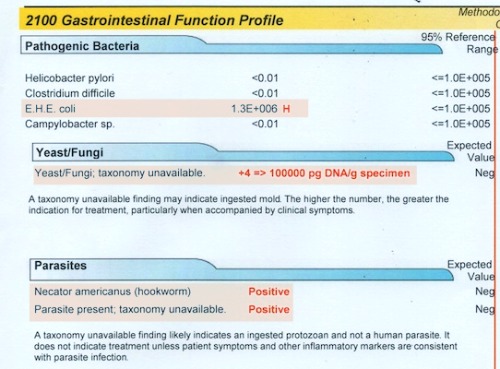
In our office we rely heavily on laboratory findings of our patient’s labs to determine their internal biochemistry, mainly blood-serum tests, but here lately we have been diving deeper into patients that have chronic infections using the Gastrointestinal Full Profile. We are able to determine what type of species is being inhabited and if the patient has any drug resistant genes. With this information we are able to open a full arsenal to both the patient and the treating medical physician.


Unlike bacteria and viruses, molds unfortunately share the same cell characteristics to humans.  Humans and molds are eukaryotic cells which are further evolved and much more sophisticated than the prokaryotic cells being bacteria.   


This patient has a chronic infection, parasites and a positive DNA finding of Yeast/Fungi.


Common Question:
If mold is found on our food, bread or jelly, can we cut off the moldy portion and eat the rest?

Answer:
NO!! Molds are microscopic organisms therefore they are not visible to the naked eye but they are still present.(1)  When a mold spore lands on an apple for instance, the first strand that grows out is called a hypha.  Then those mold threads continue to spread and grow throughout the whole apple which is similar to a root system of a tree and this becomes hyphae.  Then as more hyphae grow throughout the whole apple, this is called mycelium.  As conditions continue to remain favorable to the mold, the mycelium must spread throughout the whole apple before they sprout their reproductive bodies which produces mold spores.  This is what is visible to the naked eye as black fuzz or white cotton balls.  Remember just because you slice that visible portion of mold off of the apple, you are only slicing off the reproductive bodies of the mold.  The mold has spread all over the apple which is why that mold infested food must be thrown out.  My botany professor always used to tell us, “when in doubt, throw it out.”


Difference between Bacteria and Mold: Diagnosis and Treatment


Bacteria species such as Streptococcus is responsible for strep throat (sore throat) which typically results in the patient feeling feverish, malaise and fatigued. Bacterial infections can infiltrate sinuses, throat, lungs, gastrointestinal, reproductive organs, and skin. Mold species may infect the same areas.


a. b. c.
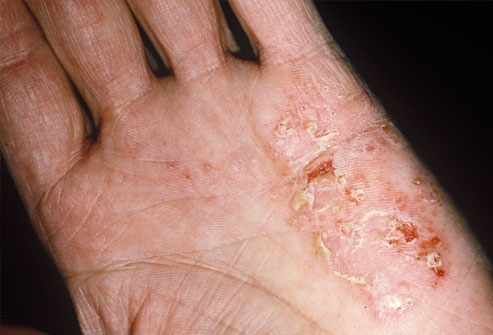
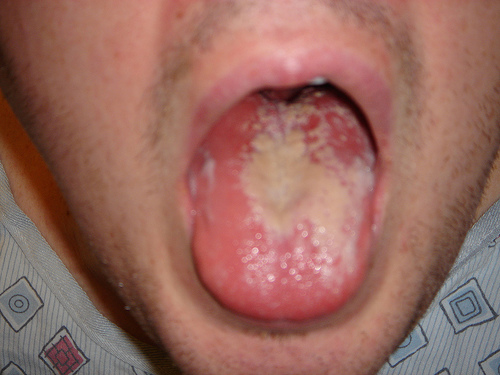
Chronic yeast infections: (a) is due to ingestion of mold resulting in itchy, dry and flaking skin. (b) mold allergies affecting nasal cavities. (c ) candida infection in the mouth.


Exposure to high levels of fungi can be a health threat from inhalation, ingestion or skin contact involving tiny mold spores (invisible to the naked eye), mold toxins (mycotoxins) or mold bodies themselves. Initial symptoms vary depending on entry point but if inhaled; sore throats, hoarseness, cough and nasal congestion. In time as infection progresses symptoms such as headaches, fatigue, rashes, dizziness, shortness of breath, sinus infections, ear pain, muscle and joint pain, and fever. These are symptoms of direct mycotoxin exposure. (2)

As mold conditions go untreated the immune system is overloaded and becomes overzealous. Clinical manifestations of this overloaded immune system result in an unrelenting flu syndrome. This has an effect on one’s daily life because it affects their thinking ability (cognition), energy levels, sleeping patterns, etc. According to research, these changes can be reversible, at least in part, but they can take years to resolve. Correcting digestive chemistry such as low stomach acid is critical for patient recovery.


Diagnosis of mold hypersensitivity syndrome rests on three criteria:(2)
1. An identified heavily contaminated source
b. Found on food
2. Appropriate symptoms temporally related to exposure
a. Difficulty losing weight, chronic allergies, skin problems (dried, rashes, red bumps), chronic headaches, chronic sinusitis, chronic yeast infections, ringworm, etc.
3. Positive lab results
b. Postive IgG antibody test - Serum blood test


Additional Information:


Molds are highly cross-reactive, which means that an antibody response on exposure to mold A may show significant reactivity on the IgG panel test to mold B as well. This means that people who have a mold allergy are more sensitive to food allergies involving grains i.e. bread.


Molds can be VERY difficult to get rid of. If you notice the “Diagnosis” listed above, you have to identify it, figure about where you caught it, check for any other exposure and stop feeding it. Diets high in fermented foods such as cheeses, bread, or beer and those high in sugars, including fruits, fats and oils increase internal fungal growth, according to the website Healing Cancer Naturally.(3)


Garlic and onions, sources of manganese, B6, flavonoids and Vitamin C are said to retard viruses and yeast. Other foods that help combat molds include: shallots, ginger, leeks, green vegetables, soy products, and fish. (3)


A product we carry in the office called “Yeastonil.” This scientifically backed formula helps to establish a broad spectrum anti-fungus, anti-mold, and anti-ova intestinal environment.  It provides natural compounds that have shown powerful mold, yeast, and fungus growth inhibition, and help modulate the unhealthy microbial environment produced by these microorganisms.


Conclusion


Foods and supplements alone are not enough to combat mold. In patients with a chronic history of mold must check their home and office for mold spores. This is best left to a professional but there are kits such as Boomerang Air Quality Test that may indicate the need for mold removal.


The first approach to getting rid of mold is to confirm that you have a mold problem through laboratory testing. Second is to identify its source or entry. Third stage is correction.


There is an abundant amount of information on Yeast, Mold, and Fungi that is not discussed here. If you wish to know more about what you can do to keep from getting “old and moldy” contact our office today and get assessed the correct way. If you are not in the Sacramento region, do not worry ~ 40% of patients we take care of in the office are out of state.


Thank you!


References:


1. Molds on Food: Are they Dangerous? http://www.fsis.usda.gov/FactSheets/Molds_On_Food/


2. Chronic Neuroimmune Diseases: Fungal Hypersensitivity. Vincent Marinkovitch, MD.  http://www.anapsid.org/cnd/diffdx/marinkovitch.html


Saturday, December 7, 2013

The Gut Influences… Everything

The Gut Influences … Everything


Our gastrointestinal (GI) tract influences so much of our bodies and many doctors overlook its complexity and not to mention its importance. In this article I will introduce you to the gastrointestinal tract connections throughout the body. The big three include immunity, endocrine (hormones) and nervous system.


IMMUNITY


Researchers speculate that 70% of the body's immune system resides within the GI tract. This is AMAZING!! Not only does our gut have the enormous responsibility of breaking down food into minute particles, initiating the release of digestive enzymes, and absorbing nutrients to provide energy for our entire body but it is the gatekeeper for pathogens wanting to invade your body.


The body is equipped with two sides of an immune system, equally important TH-1 and TH-2. T-Helper (TH) 1 is mainly stimulated after having a virus or bacterial infection. Most of these cells die off within 7 - 10 days, this is why your average cold last a week to 10 days. TH-2 is a main source of antibody production.(2) So for people who never claim to get sick, this is a big RED FLAG for us indicating that this person does not have a fully functioning nervous system because it cannot even initiate an immune response. Because lets face it, who does not get exposed to something everyday on this earth whether it be bacteria, virus, mold, spoiled food, uncooked food, allergens, environmental toxins, etc.?


HORMONE INFLUENCE:


Hormones are typically made by endocrine and exocrine glands such as the thyroid, pancreas, adrenals and ovaries/testes. However, most hormones are activated and secreted by the gastrointestinal tract.


Thyroid hormone for instance makes approximately 93% T4 (inactive thyroid hormone) and 7% T3 (active thyroid hormone). So in the ideal, healthy patient this is what the current research literature is saying: Once the thyroid has produced T4, it is metabolized peripherally from the thyroid into a combination of T3 hormones by the enzyme 5’ deiodinase, mostly in the liver. Approximately 40% of the available T4 is converted into T3, 20% is converted into reverse T3 (rT3) which is irreversibly inactive, and 20 % is converted into T3 sulfate (T3S) and triodothyroacetic acid (T3AC).


T3S and T3AC are inactive thyroid hormones until they circulate into the gastrointestinal tract and are acted upon by intestinal enzymes which make active T3 hormone.(3)


Hormones such as estrogen and testosterone after being used by their target cells must be broken down from their original structures and detach or cleave metabolites that may be reused by the body. This breaking of metabolites is done in the liver. So in simple, here is the process. The hormone is used and thrown into the venous circulation which is then delivered to the liver. The liver breaks off all the useful parts of the discarded hormone and passes on the rest, this is phase I of liver detoxification. Phase II conjugates the discarded hormone, puts a tag on it, which says “no good or go to dump.” The discarded hormone then gets dropped into the trash which we call phase III or biliary elimination. The gallbladder or biliary system then dumps the trash into the colon where it can be properly discarded as feces.


Complications arise when the body is able to break the bond from phase II (conjugation) releasing the discarded hormone back into circulation. This is one example of how estrogen and testosterone (pending the sex of the patient) may increase to unhealthy levels. This is one explanation of hormone sensitive tissues becoming prolific or cancerous.


NERVOUS SYSTEM INFLUENCE:


“The hormones of the gastrointestinal tract have a greater impact than neurological connections,” stated by Arthur Guyton’s 11th Edition of Medical Physiology. This is a profound statement when we as doctors stop and think about it. The big kick today in medicine is caring for the brain, have to rejuvenate the brain, have to keep the brain active and healthy.


Well my first question to this school of thought is... “Where does the brain get its nutrients from?”


Anybody??  


Well we eat food and it gets digested in … THE GUT!!


Ask yourself a question, “what is the goal of taking one of the best supplements on the market if your body is unable to break it down and use the nutrients it provides?”


In our office we recommend patients taking the 2100 Gastrointestinal Profile which looks at Predominant bacteria, Digestion, Immunity, Pathogens (i.e. Yeast/Fungi, Opportunistic, Parasites & Pathogenic), Beneficial Short Chain Fatty Acids, pH, and Absorption. With an in depth look at these factors we are able to address the patient’s needs in a systematic and objective point of view.


  Hmmm... sounds reasonable?


The GI tract is a complex and dynamic ecosystem due to the interplay between peristaltic movement, food particles, host cells and defence molecules and a vast array of resident microbes and their secreted products. The microbial population, estimated to total about 10^14th bacteria, is 10 to 20 times greater than the total number of cells in the human body. It has been estimated that between 500 to 1000 bacterial species inhabit the GI tract.(1)


Many of these microbes play key roles in the thyroid metabolism, digestive enzymes, calorie expenditures, vitamins and mineral, and SO MANY MORE!! In the diagram below it shows how hormones influence the rate of food intake. The upper part of the stomach releases Ghrelin which sends signals to the brain to increase food intake while Obestatin, Cholecystokinin (CCK), Oxyntomodulin (OXN) and more suppresses appetite. All these indicators effect nuclei in the brainstem, mainly in the medulla oblongata which may also alter sexual behavior and motivation. So to summarize the microbial environment can alter your brain’s chemistry enough to affect satisfaction during meals, sexual behavior and self-drive.


SUMMARY:


The gastrointestinal tract is key in balancing an unstable system. An unstable system being imbalance in hormones, obesity, brain fog, chronic allergies, chronic skin issues, chronic pain patterns, chronic fatigue, and the list goes on and on. There is a new era starting to be recognized and that is how dynamic and important the gastrointestinal tract is. No one part is greater than the sum of its parts but when all else has failed look to the gut.


References:


1. Gastrointestinal Microbiota and Regulation of the Immune System. Gary B. Huffnagle and Mairi C. Noverr. Copyright 2008 Landes Bioscience and Springer Science+Business Media.


3. Functional Blood Chemistry Manual. Dr. Datis Kharrazian. Copyright 2005