Showing posts with label hypoglycemia. Show all posts

Sunday, December 8, 2013

Is Sugar Toxic?


“In 1980, roughly 1 in 7 Americans were obese, and almost six million were diabetic, and the obesity rates, at least, hadn’t changed significantly in the 20 years previously. By the early 2000s, when sugar consumption peaked, 1 in every 3 Americans are obese, and 14 million were diabetic.”
~ Gary Taubes, NY Times


In today’s society it is common knowledge that Americans are facing a health epidemic. A boom in obesity and diabetes. On May 26th, 2009 a professor, Robert Lustig, gave a lecture called “Sugar: The Bitter Truth.” This sparked a huge viewing and a lot more research into sugar. One journalist from NY Times, Gary Taubes, wrote a very intriguing article in which all the italicized paragraphs are quoted from in this article.


In our practice we are constantly reminding people that sugar is bad for them, it is hard on organs such as pancreas, liver, kidneys and the brain. This goes for all people across races, ethnic, genders, etc. These organs are vital in detoxification, metabolism, and SO MUCH MORE!! For people who have diabetes there is a multitude of interactions that must be corrected in order to regain a person’s health.


In Gary Taubes article he talks about how Diabetes Mellitus type II and insulin resistance is due to a dysfunction of the pancreas not being able to release enough insulin. This theory is not completely true.


One of my mentors discussed with me one of his research findings that in a cadaver study while looking at Type II Diabetics, some of the cadavers in the study had normal pancreatic insulin function. This means that the pancreas was able to release normal levels of insulin but the patient was still diagnosed with diabetes. This means that when addressing issues of high blood sugar we must look at both pancreas function and insulin receptor sites.


Sugar is not just an empty calorie, Lustig says; its effect on us is much more insidious. “It’s not about the calories,” he says. “It has nothing to do with the calories. It’s a poison by itself.”


If Lustig is right, then our excessive consumption of sugar is the primary reason that the numbers of obese and diabetic Americans have skyrocketed in the past 30 years. But his argument implies more than that. If Lustig is right, it would mean that sugar is also the likely dietary cause of several other chronic ailments widely considered to be diseases of Western lifestyles — heart disease, hypertension and many common cancers among them.


I believed this article to be very valuable. Doctors such as myself love gloating to the everyone and telling them to “do this” and “do that” but yet modern medicine (in the past) has refused to believe what we (Holistic providers) say is true. Finally the research is here proving it. Dr. DeJarnette and Dr. Rees to worldly renowned doctors dedicated a few decades of their life to research and helping people feel better. So much research like this article are finally getting out and opening eyes and ears.


Closing Thought


A key point in the article, the writer states “... because he’s willing to insist publicly and unambiguously, when most researchers are not, that sugar is a toxic substance that people abuse. In Lustig’s view, sugar should be thought of, like cigarettes and alcohol, as something that’s killing us.”

I hope you all take GREAT care of your bodies! Remember, you only have one!


Thyroid - Gut Connection


When was the last time you walked into your doctor’s office and said “I would like my digestive tract assessed because I know my thyroid hormones are out of balance?”

Hippocrates (Image Right) told us 2,000 years ago, “Death begins in the colon.”

How did he know that? 

Did he have like a special antenna that only he could hear or tune into? NO!! He observed the human body and thought logically. When you eat food, it goes in your mouth and down into your gut. Right? (the answer is yes)

What if that salad was not washed right and it still had pesticides on it? What if that steak was improperly cooked and it was infected with E. Coli? I can sit here and write 10,000 what if scenarios but what if you had a properly working digestive system?

Most people don’t, especially those with thyroid issues including hypo- (poor) and hyper- (too much) -thyroidism. All the nutrients, minerals, cofactors, etc. must be digested and absorbed through the gastrointestinal tract. If there is a digestive issue, indigestion, food allergies, diarrhea and/or constipation etc. it means there is an imbalance in the gastrointestinal tract which ultimately causes a loss of stomach acid production, inadequate pH and dysbiosis.


The Thyroid - Gut connection is a very complex an integrated system that should be screened in EVERY thyroid case. The #1 cause worldwide of thyroid hypofunction (hypothyroidism) is iodine deficiency, but it is NOT the #1 cause in the United States. The #1 cause of hypothyroidism in the U.S. is Hashimoto’s autoimmune thyroid. (For more information about autoimmune thyroid consult our office)

To support hypothyroidism or regulate an autoimmune thyroid condition like Hashimoto’s, you must address the digestive tract. Gut dysfunctions are the most commonly overlooked health issue in the medical field today (including alternative care).


Healthy Gut = Healthy Thyroid


The thyroid gland is the gas pedal for the body. When the body's metabolism is running slow, more thyroid hormone is produced to speed up metabolism. When the body’s metabolism is on overdrive, the thyroid will diminish the amount of thyroid produced. The body is a reflex machine, constantly trying to maintain homeostasis or equilibrium. In doing this many mechanisms and pathways are cut short or over used. For example, if you eat fried fatty foods 4 days out of the week, your gallbladder will not like you and will become sluggish and make gallstones.

Did you know with a sluggish gallbladder you minimize your body’s ability to clear hormones including estrogen?

FUN FACT:  
When you remove your gallbladder the cystic duct takes over  the storage of bile.

Every cell in the body has a thyroid receptor, even neurons (cells in the brain). Most people are unaware they have a thyroid issue until they start having issues including but not limited too:

- Fatigue / Sluggish
- Thinning of hair
- Loss of the outer ⅓ of eyebrow
- Cold hands and feet, all over
- Dry skin / flaky
- Difficulty losing weight


Summary

The Thyroid - Gut Connection is an invaluable aspect of health that many healthcare providers overlook. The thyroid has a receptor on every cell in the body. The gut digest and absorbs food for every cell in the body. When gastric atrophy occurs, proteins are not properly digested and often become a source of inflammation. With sluggish gallbladder / biliary system the body is not equipped to digest and absorb fats which also affect cholesterol levels, adrenals status, and hormones. The Thyroid - Gut Connection should be assessed on every patient with the above signs and symptoms for preventative health.

For more information on the Thyroid - Gut Connection contact our office through our website Weber Chiropractic or call 916.616.1595.


Are You Old and Moldy?

Identifying Mold/Fungi/Yeast & How it Behaves


Most of us have seen mold in one form or another on some item throughout our days, moldy bread, black mold creeping up the wall, I have actually seen it on decaying animals. “GROSS!!” Did you know mold, yeast and fungus can enter into your body through multiple entry routes and can wreak havoc on your body. In this article I want to define what mold is, discuss the difference between bacteria and mold, and then bring it all together for you so when someone asks you about mold, yeast or fungus you have something to tell them.


What Is Mold?


Mold is classified as an opportunistic pathogen meaning, if the environment is right it will move in! First thing to know about “Mold,” what is it?


For simplicity sake the term “mold” encompasses all of the following: yeast, fungi and fungus.


Molds are microscopic fungi that live on plant or animal matter in a moist environment either warm or cold. When humidity is high there is a high potential for mold. No one knows how many species of fungi exist, but estimates range from tens of thousands to perhaps 300,000 or more. Most are filamentous (thread-like) organisms and the production of spores is characteristic of fungi in general. These spores can be transported by water or insects. An interesting characteristic of mold is that it can travel via airborne. Mold travels a lot like dandelion seeds blowing across a meadow.(1)


Detection of species


In our office we rely heavily on laboratory findings of our patient’s labs to determine their internal biochemistry, mainly blood-serum tests, but here lately we have been diving deeper into patients that have chronic infections using the Gastrointestinal Full Profile. We are able to determine what type of species is being inhabited and if the patient has any drug resistant genes. With this information we are able to open a full arsenal to both the patient and the treating medical physician.


Unlike bacteria and viruses, molds unfortunately share the same cell characteristics to humans.  Humans and molds are eukaryotic cells which are further evolved and much more sophisticated than the prokaryotic cells being bacteria.   


This patient has a chronic infection, parasites and a positive DNA finding of Yeast/Fungi.


Common Question:
If mold is found on our food, bread or jelly, can we cut off the moldy portion and eat the rest?

Answer:
NO!! Molds are microscopic organisms therefore they are not visible to the naked eye but they are still present.(1)  When a mold spore lands on an apple for instance, the first strand that grows out is called a hypha.  Then those mold threads continue to spread and grow throughout the whole apple which is similar to a root system of a tree and this becomes hyphae.  Then as more hyphae grow throughout the whole apple, this is called mycelium.  As conditions continue to remain favorable to the mold, the mycelium must spread throughout the whole apple before they sprout their reproductive bodies which produces mold spores.  This is what is visible to the naked eye as black fuzz or white cotton balls.  Remember just because you slice that visible portion of mold off of the apple, you are only slicing off the reproductive bodies of the mold.  The mold has spread all over the apple which is why that mold infested food must be thrown out.  My botany professor always used to tell us, “when in doubt, throw it out.”


Difference between Bacteria and Mold: Diagnosis and Treatment


Bacteria species such as Streptococcus is responsible for strep throat (sore throat) which typically results in the patient feeling feverish, malaise and fatigued. Bacterial infections can infiltrate sinuses, throat, lungs, gastrointestinal, reproductive organs, and skin. Mold species may infect the same areas.


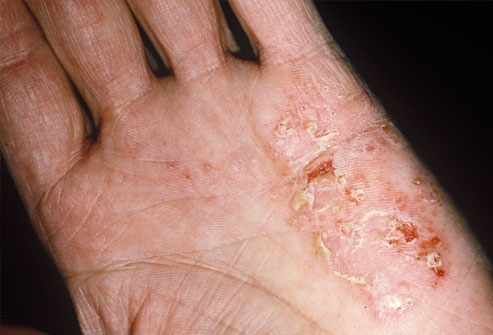
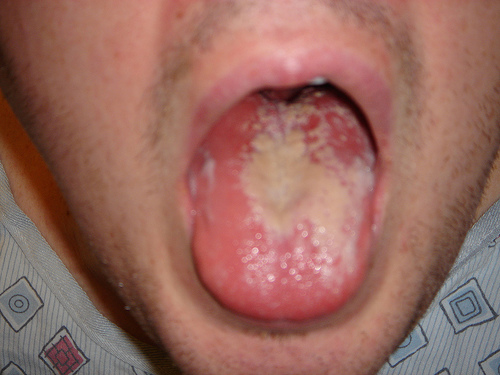
a. b. c.
Chronic yeast infections: (a) is due to ingestion of mold resulting in itchy, dry and flaking skin. (b) mold allergies affecting nasal cavities. (c ) candida infection in the mouth.


Exposure to high levels of fungi can be a health threat from inhalation, ingestion or skin contact involving tiny mold spores (invisible to the naked eye), mold toxins (mycotoxins) or mold bodies themselves. Initial symptoms vary depending on entry point but if inhaled; sore throats, hoarseness, cough and nasal congestion. In time as infection progresses symptoms such as headaches, fatigue, rashes, dizziness, shortness of breath, sinus infections, ear pain, muscle and joint pain, and fever. These are symptoms of direct mycotoxin exposure. (2)

As mold conditions go untreated the immune system is overloaded and becomes overzealous. Clinical manifestations of this overloaded immune system result in an unrelenting flu syndrome. This has an effect on one’s daily life because it affects their thinking ability (cognition), energy levels, sleeping patterns, etc. According to research, these changes can be reversible, at least in part, but they can take years to resolve. Correcting digestive chemistry such as low stomach acid is critical for patient recovery.


Diagnosis of mold hypersensitivity syndrome rests on three criteria:(2)
1. An identified heavily contaminated source
b. Found on food
2. Appropriate symptoms temporally related to exposure
a. Difficulty losing weight, chronic allergies, skin problems (dried, rashes, red bumps), chronic headaches, chronic sinusitis, chronic yeast infections, ringworm, etc.
3. Positive lab results
b. Postive IgG antibody test - Serum blood test


Additional Information:


Molds are highly cross-reactive, which means that an antibody response on exposure to mold A may show significant reactivity on the IgG panel test to mold B as well. This means that people who have a mold allergy are more sensitive to food allergies involving grains i.e. bread.


Molds can be VERY difficult to get rid of. If you notice the “Diagnosis” listed above, you have to identify it, figure about where you caught it, check for any other exposure and stop feeding it. Diets high in fermented foods such as cheeses, bread, or beer and those high in sugars, including fruits, fats and oils increase internal fungal growth, according to the website Healing Cancer Naturally.(3)


Garlic and onions, sources of manganese, B6, flavonoids and Vitamin C are said to retard viruses and yeast. Other foods that help combat molds include: shallots, ginger, leeks, green vegetables, soy products, and fish. (3)


A product we carry in the office called “Yeastonil.” This scientifically backed formula helps to establish a broad spectrum anti-fungus, anti-mold, and anti-ova intestinal environment.  It provides natural compounds that have shown powerful mold, yeast, and fungus growth inhibition, and help modulate the unhealthy microbial environment produced by these microorganisms.


Conclusion


Foods and supplements alone are not enough to combat mold. In patients with a chronic history of mold must check their home and office for mold spores. This is best left to a professional but there are kits such as Boomerang Air Quality Test that may indicate the need for mold removal.


The first approach to getting rid of mold is to confirm that you have a mold problem through laboratory testing. Second is to identify its source or entry. Third stage is correction.


There is an abundant amount of information on Yeast, Mold, and Fungi that is not discussed here. If you wish to know more about what you can do to keep from getting “old and moldy” contact our office today and get assessed the correct way. If you are not in the Sacramento region, do not worry ~ 40% of patients we take care of in the office are out of state.


Thank you!


References:


1. Molds on Food: Are they Dangerous? http://www.fsis.usda.gov/FactSheets/Molds_On_Food/


2. Chronic Neuroimmune Diseases: Fungal Hypersensitivity. Vincent Marinkovitch, MD.  http://www.anapsid.org/cnd/diffdx/marinkovitch.html


Saturday, December 7, 2013

Dysglycemia: Body Disruptor

Dysglycemia
Do you have poor focus and concentration? Do you have some extra pounds around your waist that will not seem to leave no matter how much exercise or healthy eating you do? You very well may have a blood sugar issue.

Dysglycemia is defined as any disorder of blood sugar (glucose) metabolism. This includes incompetent pancreatic function and/or faulty insulin receptor sites. Poor blood sugar metabolism is highly common in the U.S. population today. The “SAD” (Standard American Diet) is very low in essential fatty acids and fiber, but high in polyunsaturated fats and sugar which will promote blood sugar disorders for decades to come.

"Diabetes Mellitus type II has become explosive in today’s society, and studies have predicted that it will bankrupt the national healthcare system over the next decade."


Health Considerations:


Dysglycemia disrupts ALL aspects of human physiology; muscular performance, digestion, hormones, and central nervous system function including neurotransmitter production. If the body is unable to adequately digest and utilize blood sugar from our diet, it leads to oxidative stress which results in inflammatory processes and free radicals causing cell death.


In our office, it is astounding how many patients fight depression, anxiety and/or dementia. Several of our patients have decreased the signs and symptoms of these issues just by managing their blood sugar better. Issues like these are often a direct result of unresolved blood sugar metabolism. Years of misery and sadness can be avoided if your blood sugar is regulated appropriately.


The current healthcare model does not adequately manage or prevent the progression of dysglycemia. We have to remember that we get our energy from blood sugar properly converted to ATP (cellular energy). When blood sugar is not properly regulated it may lead to the following:


  1. Increased Risk for coagulation (Clots)
  2. Arteriosclerosis
  3. Difficulty losing weight
  4. High Cholesterol
  5. Hormone Disorders in Women and Men
  6. Increased Risk for Infections
  7. Fatigue
  8. Hypothyroid
  9. Anemia
  10. Allergies/Food Sensitivities
  11. Chronic Fatigue Syndrome (Adrenal)
  12. Dementia / Alzheimer's
  13. Early Onset Aging
  14. Insomnia
  15. Chronic Pain patterns - Fibromyalgia


Types:
There are two main types of blood sugar problems that should be identified before diabetes mellitus is diagnosed, insulin resistance and reactive hypoglycemia.

Reactive Hypoglycemia takes effect when the pancreas pumps out too much insulin due to spikes in blood sugar, this is typically the result of sweets or other high glycemic foods. These types of people space out easily, have poor short term memory, irritable and short-tempered if they go too long between meals. These people often have difficulty eating breakfast because of nausea or lack of appetite and feel exhausted around 3 - 5 in the afternoon.

Type 1 Diabetes is an autoimmune reaction. This article discusses insulin receptor issues.
Please understand what a normal functioning insulin receptor site does.


The second type of blood sugar problem typically results in high blood sugar levels, a fasting glucose above 100 mg/dL termed insulin resistant.

This particular group of people are on their way to Type 2 Diabetes in a very short time if lifestyle modification (diet and exercise) is not changed quickly. Insulin resistance is also known as Syndrome X or Metabolic Syndrome in current literature. Insulin is normally used to allow glucose into the cell, the same way a key gets put into the lock of a door to open it. The excess amount of insulin in high blood sugar exhaust the lock (cell), making the key (insulin) not work effectively, therefore the cells become insulin resistant. 

     In this respect the cells are not receiving their food supply and lacking the ability to make energy. These types of people fall asleep easily after a meal. If this particular person eats a rich-carbohydrate meal they typically nod-off after the meal. People with this issue often find it difficult to fall asleep, they may need coffee or sweets after a meal to keep from napping, and have a very difficult time losing weight. When these people get stressed, it is very easy to put on unwanted weight.

     So with respect of knowing these 2 types of dysglycemia, our office can effectively manage and assist people with these blood sugar issues with nutritional supplementation, SOT chiropractic methods, change in dietary habits, and better exercise routines.
In Conclusion:


Dysglycemia is not something that you should just watch and monitor until full blown Diabetes. In my opinion this is a serious problem that is overlooked by our current healthcare model. Take it upon yourself to recognize the symptoms and seek help and support. At Weber Chiropractic we are passionate about educating patients and making sure they know what their body can handle and not handle to keep it healthy.

If you are interested in discussing your case with our office staff, please contact our office, www.weberchiroca.com.