Showing posts with label neurons. Show all posts

Saturday, December 14, 2013

Exercise and Healthy Brain

How often do you walk into a room and forget why? How often do you get fatigued while driving or reading a book? What about thinking or problem solving after eating? Have you ever wondered why some people can read for hours on end and you get tired after just a few minutes? Brain fog and endurance are a critical part of aging.


To quote one of my mentors, "Aging is just another term for brain degeneration."

Just so we are clear what I mean when I say 'Brain Degeneration' is a decline in brain health. A decline in brain health may be the cause of anemia, dysglycemia, infection, fungal overgrowth, dysbiosis, hormone imbalance, liver detoxification, environmental pollutant exposure, autoimmunity, gastrointestinal permeability, poor blood flow and compromised neurotransmitter activity.

Now for the encouraging side of this article, how to support brain health and optimal health. First and foremost, if you have any questions or hesitations about any part of this article contact our office and ask the question. The dumbest question is the one you do not ask.

One of the most basic solutions to support optimal brain health is exercise! I am NOT recommending go join a gym or workout for 5 days a week for multiple hours a day. NO NO NO!!!

If you are currently on a work out program or have not worked out for a while you will want to start out at 50-60% of your Maximum Heart Rate (MHR). How do you determine your MHR you ask? That's easy:

220 - [age] = MHR

Example: A 40 year old female wants to start a high-intensity workout routine. Her maximum heart rate would be 180. [220 - 40 = 180] I recommend she start out at 50% of her MHR which would be 90 heart beats per minute. After 1 or 2 weeks of this workout routine, move up to 135 bpm. After another week or two, try to progress to the 180 bpm.


How Long Do I Workout?

The duration of high-intensity workout is much lower compared to an endurance workout routine. A 3-minute workout routine will produce phenomenal results for increasing blood flow to the brain. By increasing blood to the brain you are doing ALL of the following:


  • Increasing anti-inflammatory hormones
  • Increasing anti-inflammatory hormones
  • Stimulating endothelial-Nitric Oxide Synthase (NOS)
  • Stimulating neuronal - NOS
  • Diminishing induced - NOS
  • Increasing lymphatic drainage
  • Decreasing the level of cortisol
  • Increase Growth Hormone
  • Increase Opioid Release which supports regulatory T-cells
  • Improve Insulin Receptor Sensitivity
  • Improve immunity
  • Increases heart health
  • Minimizes normal stress response
  • Improve Serotonin --> improves mood
  • Improves Dopamine --> improves focus and motivation
  • Reduce oxidative stress / inflammation
  • Supports nerve growth
  • Improve neuronal synapse and communication between neurons


Exercise and High Glucose Issues (Insulin Resistance &/or Diabetics)

Even exercise as little as a 20 minute walk of moderate intensity can improve insulin resistance. However, the more intense the exercise, the greater the impact on insulin receptor signaling. Many patients will see minimal change in their blood glucose levels from only doing mild-to-moderate exercise. These people will need to increase their intensity to notice significant changes in blood glucose control. 


Exercise Intensity Levels

Light
Max. Heart Rate (MHR) is 40% - 55% of MHR.
This level does not induce sweating unless it is a hot, humid day. No noticeable changes in breathing.

Moderate
MHR is 55% - 69%.
Sweating after 10 minutes. Breathing becomes deeper and more frequent. You can carry on a conversation but not sing.

High
MHR is 70% or greater.
Will break a sweat after 3-5 minutes. Breathing is deep and rapid. You can only talk in short phrases.


What Kind of Exercise(s):

Sprints
Push-ups
Mountain climbers
Squats (w/ weight or without)

Here are just a few ideas to get you thinking in the right direction. Of course, being a chiropractor, you have to workout in your level of comfort and stability. If you notice that your muscles are tighter on one side of your body versus the other, you have a chiropractic problem that should be addressed by a chiropractor. Muscles should not hurt when you push on them. This is another discussion for another time.

If you need more ideas on exercise routines, I encourage you to go to www.workoutlabs.com. This is a great website for quick routines that will increase your MHR.


Conclusion:

Do you have cold hands and/or feet? Have you noticed a decline in cognition in the last 5 years? What about the three questions I asked in the beginning of this article? Do you remember the questions? You are only as healthy as your brain is.

Exercising at a high-intensity level will increase blood flow and fire neurons from ear to ear. This will improve insulin receptor sensitivity, quantity of anti-inflammatory promoters, and support neuronal cell growth. Exercise plus healthy diet will result in extraordinary results. Please remember this one critical fact regarding brain health. If you do not use it, you lose it! 


The brain needs three things to survive:
1. Stimulation
2. Oxygen
3. Glucose (blood sugar)

I hope you have enjoyed this article. For more information on this topic or want to discuss the best workout routine for you, please contact our office.


Sunday, December 8, 2013

Thyroid - Gut Connection


When was the last time you walked into your doctor’s office and said “I would like my digestive tract assessed because I know my thyroid hormones are out of balance?”

Hippocrates (Image Right) told us 2,000 years ago, “Death begins in the colon.”

How did he know that? 

Did he have like a special antenna that only he could hear or tune into? NO!! He observed the human body and thought logically. When you eat food, it goes in your mouth and down into your gut. Right? (the answer is yes)

What if that salad was not washed right and it still had pesticides on it? What if that steak was improperly cooked and it was infected with E. Coli? I can sit here and write 10,000 what if scenarios but what if you had a properly working digestive system?

Most people don’t, especially those with thyroid issues including hypo- (poor) and hyper- (too much) -thyroidism. All the nutrients, minerals, cofactors, etc. must be digested and absorbed through the gastrointestinal tract. If there is a digestive issue, indigestion, food allergies, diarrhea and/or constipation etc. it means there is an imbalance in the gastrointestinal tract which ultimately causes a loss of stomach acid production, inadequate pH and dysbiosis.


The Thyroid - Gut connection is a very complex an integrated system that should be screened in EVERY thyroid case. The #1 cause worldwide of thyroid hypofunction (hypothyroidism) is iodine deficiency, but it is NOT the #1 cause in the United States. The #1 cause of hypothyroidism in the U.S. is Hashimoto’s autoimmune thyroid. (For more information about autoimmune thyroid consult our office)

To support hypothyroidism or regulate an autoimmune thyroid condition like Hashimoto’s, you must address the digestive tract. Gut dysfunctions are the most commonly overlooked health issue in the medical field today (including alternative care).


Healthy Gut = Healthy Thyroid


The thyroid gland is the gas pedal for the body. When the body's metabolism is running slow, more thyroid hormone is produced to speed up metabolism. When the body’s metabolism is on overdrive, the thyroid will diminish the amount of thyroid produced. The body is a reflex machine, constantly trying to maintain homeostasis or equilibrium. In doing this many mechanisms and pathways are cut short or over used. For example, if you eat fried fatty foods 4 days out of the week, your gallbladder will not like you and will become sluggish and make gallstones.

Did you know with a sluggish gallbladder you minimize your body’s ability to clear hormones including estrogen?

FUN FACT:  
When you remove your gallbladder the cystic duct takes over  the storage of bile.

Every cell in the body has a thyroid receptor, even neurons (cells in the brain). Most people are unaware they have a thyroid issue until they start having issues including but not limited too:

- Fatigue / Sluggish
- Thinning of hair
- Loss of the outer ⅓ of eyebrow
- Cold hands and feet, all over
- Dry skin / flaky
- Difficulty losing weight


Summary

The Thyroid - Gut Connection is an invaluable aspect of health that many healthcare providers overlook. The thyroid has a receptor on every cell in the body. The gut digest and absorbs food for every cell in the body. When gastric atrophy occurs, proteins are not properly digested and often become a source of inflammation. With sluggish gallbladder / biliary system the body is not equipped to digest and absorb fats which also affect cholesterol levels, adrenals status, and hormones. The Thyroid - Gut Connection should be assessed on every patient with the above signs and symptoms for preventative health.

For more information on the Thyroid - Gut Connection contact our office through our website Weber Chiropractic or call 916.616.1595.


Saturday, December 7, 2013

The Gut Influences… Everything

The Gut Influences … Everything


Our gastrointestinal (GI) tract influences so much of our bodies and many doctors overlook its complexity and not to mention its importance. In this article I will introduce you to the gastrointestinal tract connections throughout the body. The big three include immunity, endocrine (hormones) and nervous system.


IMMUNITY


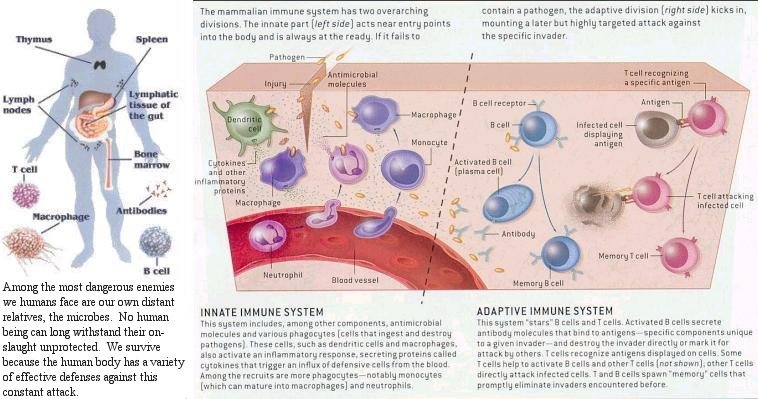
Researchers speculate that 70% of the body's immune system resides within the GI tract. This is AMAZING!! Not only does our gut have the enormous responsibility of breaking down food into minute particles, initiating the release of digestive enzymes, and absorbing nutrients to provide energy for our entire body but it is the gatekeeper for pathogens wanting to invade your body.


The body is equipped with two sides of an immune system, equally important TH-1 and TH-2. T-Helper (TH) 1 is mainly stimulated after having a virus or bacterial infection. Most of these cells die off within 7 - 10 days, this is why your average cold last a week to 10 days. TH-2 is a main source of antibody production.(2) So for people who never claim to get sick, this is a big RED FLAG for us indicating that this person does not have a fully functioning nervous system because it cannot even initiate an immune response. Because lets face it, who does not get exposed to something everyday on this earth whether it be bacteria, virus, mold, spoiled food, uncooked food, allergens, environmental toxins, etc.?


HORMONE INFLUENCE:


Hormones are typically made by endocrine and exocrine glands such as the thyroid, pancreas, adrenals and ovaries/testes. However, most hormones are activated and secreted by the gastrointestinal tract.


Thyroid hormone for instance makes approximately 93% T4 (inactive thyroid hormone) and 7% T3 (active thyroid hormone). So in the ideal, healthy patient this is what the current research literature is saying: Once the thyroid has produced T4, it is metabolized peripherally from the thyroid into a combination of T3 hormones by the enzyme 5’ deiodinase, mostly in the liver. Approximately 40% of the available T4 is converted into T3, 20% is converted into reverse T3 (rT3) which is irreversibly inactive, and 20 % is converted into T3 sulfate (T3S) and triodothyroacetic acid (T3AC).


T3S and T3AC are inactive thyroid hormones until they circulate into the gastrointestinal tract and are acted upon by intestinal enzymes which make active T3 hormone.(3)


Hormones such as estrogen and testosterone after being used by their target cells must be broken down from their original structures and detach or cleave metabolites that may be reused by the body. This breaking of metabolites is done in the liver. So in simple, here is the process. The hormone is used and thrown into the venous circulation which is then delivered to the liver. The liver breaks off all the useful parts of the discarded hormone and passes on the rest, this is phase I of liver detoxification. Phase II conjugates the discarded hormone, puts a tag on it, which says “no good or go to dump.” The discarded hormone then gets dropped into the trash which we call phase III or biliary elimination. The gallbladder or biliary system then dumps the trash into the colon where it can be properly discarded as feces.


Complications arise when the body is able to break the bond from phase II (conjugation) releasing the discarded hormone back into circulation. This is one example of how estrogen and testosterone (pending the sex of the patient) may increase to unhealthy levels. This is one explanation of hormone sensitive tissues becoming prolific or cancerous.


NERVOUS SYSTEM INFLUENCE:


“The hormones of the gastrointestinal tract have a greater impact than neurological connections,” stated by Arthur Guyton’s 11th Edition of Medical Physiology. This is a profound statement when we as doctors stop and think about it. The big kick today in medicine is caring for the brain, have to rejuvenate the brain, have to keep the brain active and healthy.


Well my first question to this school of thought is... “Where does the brain get its nutrients from?”


Anybody??  


Well we eat food and it gets digested in … THE GUT!!


Ask yourself a question, “what is the goal of taking one of the best supplements on the market if your body is unable to break it down and use the nutrients it provides?”


In our office we recommend patients taking the 2100 Gastrointestinal Profile which looks at Predominant bacteria, Digestion, Immunity, Pathogens (i.e. Yeast/Fungi, Opportunistic, Parasites & Pathogenic), Beneficial Short Chain Fatty Acids, pH, and Absorption. With an in depth look at these factors we are able to address the patient’s needs in a systematic and objective point of view.


  Hmmm... sounds reasonable?


The GI tract is a complex and dynamic ecosystem due to the interplay between peristaltic movement, food particles, host cells and defence molecules and a vast array of resident microbes and their secreted products. The microbial population, estimated to total about 10^14th bacteria, is 10 to 20 times greater than the total number of cells in the human body. It has been estimated that between 500 to 1000 bacterial species inhabit the GI tract.(1)


Many of these microbes play key roles in the thyroid metabolism, digestive enzymes, calorie expenditures, vitamins and mineral, and SO MANY MORE!! In the diagram below it shows how hormones influence the rate of food intake. The upper part of the stomach releases Ghrelin which sends signals to the brain to increase food intake while Obestatin, Cholecystokinin (CCK), Oxyntomodulin (OXN) and more suppresses appetite. All these indicators effect nuclei in the brainstem, mainly in the medulla oblongata which may also alter sexual behavior and motivation. So to summarize the microbial environment can alter your brain’s chemistry enough to affect satisfaction during meals, sexual behavior and self-drive.


SUMMARY:


The gastrointestinal tract is key in balancing an unstable system. An unstable system being imbalance in hormones, obesity, brain fog, chronic allergies, chronic skin issues, chronic pain patterns, chronic fatigue, and the list goes on and on. There is a new era starting to be recognized and that is how dynamic and important the gastrointestinal tract is. No one part is greater than the sum of its parts but when all else has failed look to the gut.


References:


1. Gastrointestinal Microbiota and Regulation of the Immune System. Gary B. Huffnagle and Mairi C. Noverr. Copyright 2008 Landes Bioscience and Springer Science+Business Media.


3. Functional Blood Chemistry Manual. Dr. Datis Kharrazian. Copyright 2005